

Employee Burnout in Client-Facing Roles: Recognising the Signs and Building More Sustainable Workplaces
It is no secret that employee burnout has become one of the most significant workplace challenges of the modern era. According to the Gallup’s State of the Workplace Report (2024), 36% of the South African workforce experiences excessive stress in their daily work and more than 71% of the workforce feels disengaged at work.
According to the World Health Organization (WHO), burnout is recognised in the 11th Revision of the International Classification of Diseases (ICD-11) as an occupational phenomenon, not a medical condition. It is defined as a syndrome resulting from chronic workplace stress that has not been successfully managed.
The WHO identifies three key dimensions of burnout:
- Feelings of energy depletion or exhaustion
- Increased mental distance from one’s job, or feelings of negativity and cynicism related to work
- Reduced professional efficacy
Importantly, burnout refers specifically to experiences within the occupational context and should not be used to describe stress in other areas of life.
Burnout is rarely caused by a single factor. Instead, it usually emerges from a combination of workplace conditions and individual circumstances, for example: lack of control, unclear expectations, workplace conflict, excessive workload, insufficient support and/or poor work-life balance.
Why are client-facing employees particularly vulnerable to burnout?
In client-facing roles, employees are expected to deliver excellent service consistently while managing their workload, the emotional labour of their role, and meeting performance standards. While burnout can affect employees in any industry, employees in client-facing positions often face unique situations and pressures that increase their risk of burnout.
Customer service representatives, consultants, healthcare professionals, hospitality staff, sales teams, and support personnel, to name a few, are required to maintain a certain level of professionalism and empathy regardless of their own stress levels or personal situations. They frequently navigate difficult conversations, manage client expectations, resolve complaints, and respond to urgent demands.
This constant emotional engagement can be mentally exhausting. Unlike many internal roles, client-facing employees often have limited opportunities to step away from the challenging interactions that they face, making recovery throughout the workday more difficult.
Recognising the Signs of Burnout
Burnout rarely happens overnight. It often builds gradually, with the following warning signs becoming more noticeable over time:
- Decline in motivation and difficulty starting the workday;
- Emotional detachment from colleagues, clients, or the role itself;
- Loss of patience or increased irritability with colleagues and clients;
- Chronic feelings of fatigue;
- Difficulty concentrating or making decisions;
- Reduced satisfaction from achievements;
- Self-doubt and declining confidence in professional competence;
- Physical symptoms like headaches, disrupted sleep and digestive issues; and
- Increased reliance on unhealthy coping mechanisms.
For employers, recognising these warning signs early is critical because burnout not only affects employee well-being, but can also lead to a decline in customer service, increased absenteeism, lower productivity and higher staff turnover.
The Cost of Ignoring Burnout
When burnout is overlooked, its effects can be significant for both employees and organisations.
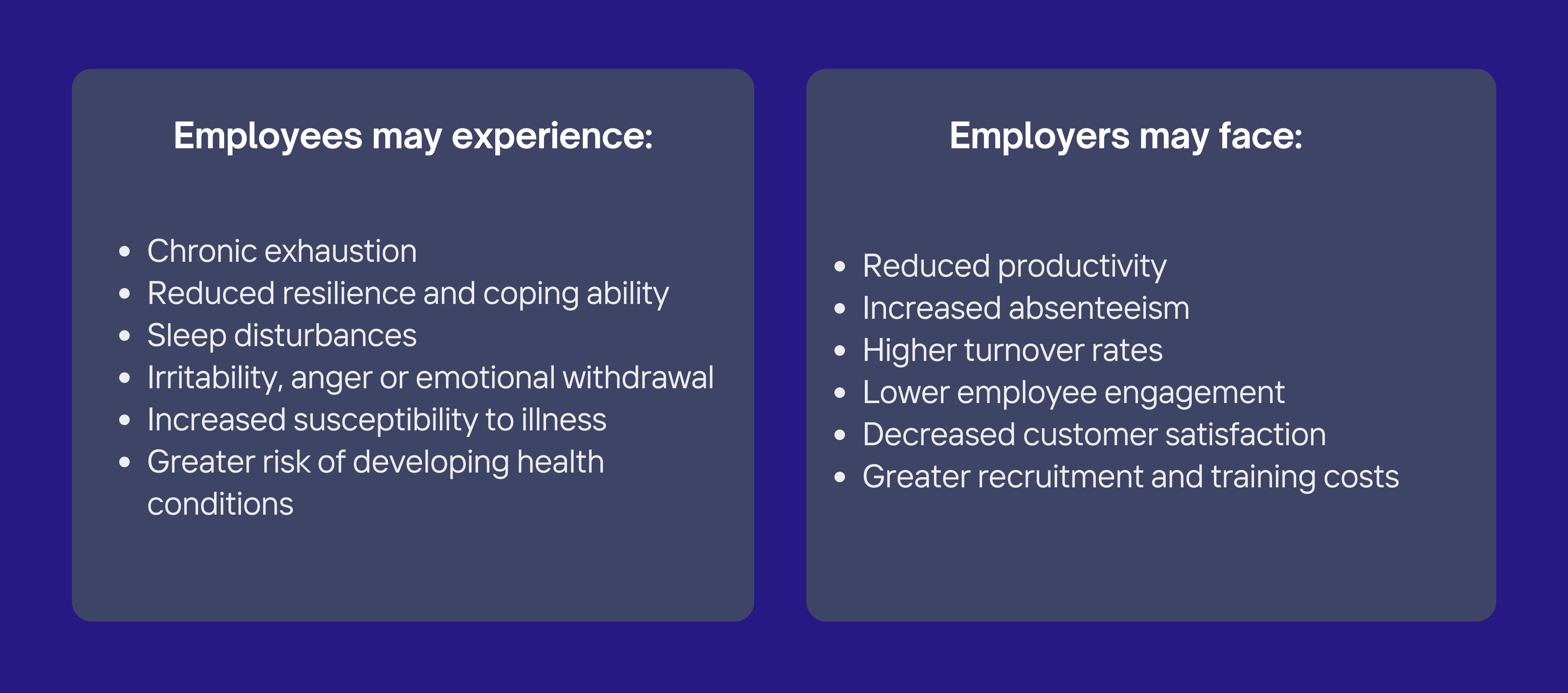
In client-facing environments, burnout can directly affect customer relationships, brand reputation and ultimately the overall business performance.
Preventing and Managing Burnout
Addressing burnout requires both organisational commitment and individual action. While employees can adopt healthy coping strategies, employers play a crucial role in creating environments where chronic stress is less likely to occur.
What can employers do?
- Promote realistic workloads – ensure staffing levels and performance expectations are attainable.
- Increase employee autonomy – give employees more control over how they manage their work and interactions.
- Provide clear expectations – clearly communicate goals, responsibilities and performance measures.
- Encourage regular breaks and leave – recovery time is essential for maintaining long-term well-being.
- Invest in training – managers should be equipped to identify early signs of burnout and support employees appropriately. Moreover, employees should be equipped with helpful tools to encourage self-regulation, resilience and quick “reset” practices to help manage the daily requirements of their job.
- Foster psychological safety – employees should feel comfortable discussing concerns without fear of judgement or negative consequences.
- Provide access to support services – employee assistance programmes, coaching and mental health resources can offer valuable support when needed.
Fostering Sustainable Client-Facing Workplaces
Burnout is not simply an individual employee issue. It is often a signal that workplace structures and expectations need some attention. For employers who rely on client-facing employees, proactively addressing burnout is important for both individual wellbeing and business success.
By recognising the signs early, understanding the underlying causes and creating supportive work environments, employers can help employees to remain engaged, productive and resilient. In turn, healthier employees are better equipped to deliver the exceptional customer service that drive organisational success.
At Joubert & Associates we partner with employers to aid them in supporting their staff through organisational design and targeted training programmes. If you need assistance in this regard, our expert consultants are here to assist.
Article written by: Jané Theron
Sources:
https://www.mayoclinic.org/healthy-lifestyle/adult-health/in-depth/burnout/art-20046642
https://www.stellenboschbusiness.ac.za/news/2024-07-01-real-costs-burnout-workplace
https://www.gallup.com/workplace/313160/preventing-and-dealing-with-employee-burnout.aspx